MAS AIRG Readiness Assessment

Where do you stand? What's the gap? What do you do first?

What It Is

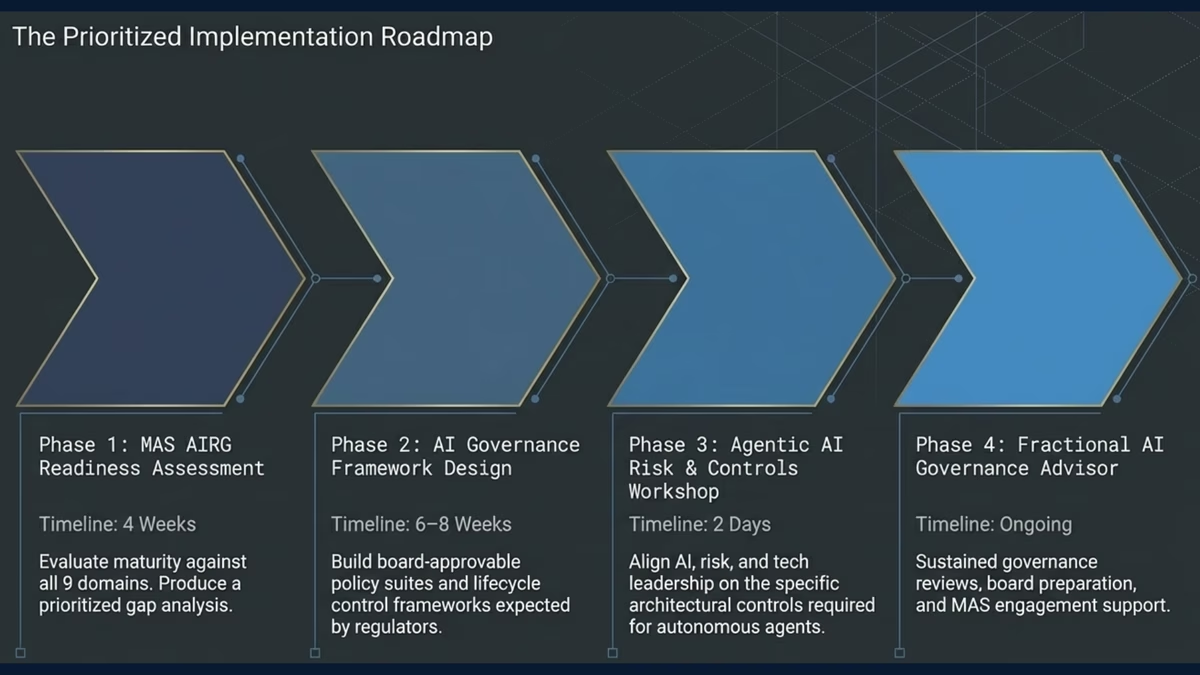
A structured 4-week assessment that evaluates a financial institution's current AI governance maturity against every AIRG requirement and produces a prioritised compliance roadmap. This is the comprehensive starting point that covers all nine AIRG domains.

Most financial institutions are starting from near-zero on AI-specific governance. The AIRG organises obligations across nine domains — governance and oversight, AI identification and inventory, risk materiality assessment, data management, fairness and transparency, evaluation and testing, human oversight and control, third-party AI risk, and monitoring and incident response. The Readiness Assessment evaluates current capability against each domain and produces a sequenced plan to close the gaps.

What You Get

  1. AI Landscape Discovery Report — Documents all identified AI use cases, systems, and models across the institution (including shadow AI and third-party AI), mapped to business functions. This becomes the foundation of the AIRG-mandated AI Inventory. The discovery methodology uses Corvair's agent registry framework as the classification schema — every AI system is profiled by identity, authority, data access, and operational scope.
  2. Materiality Assessment Framework — A customised assessment methodology using the three MAS-mandated dimensions (Impact, Complexity, Reliance) calibrated to the institution's specific risk appetite. Classifies each discovered AI use case into materiality tiers with recommended control intensity. Incorporates Corvair's epistemic gravity weighting to identify which AI dependencies are truly "load-bearing" to the business.
  3. Gap Analysis Matrix — Current state vs. AIRG requirements across all nine domains. Colour-coded by severity (red/amber/green). Identifies which gaps are structural (governance, policy), which are procedural (lifecycle controls), and which are technical (monitoring, testing).
  4. Compliance Roadmap — Sequenced implementation plan with effort estimates, dependencies, and quick wins. Prioritised by regulatory risk (what will MAS inspect first?) and operational risk (what could cause harm soonest?).
  5. Executive Briefing — 90-minute session for Board/Risk Committee/Senior Management covering AIRG obligations, the institution's current exposure, and recommended actions. Satisfies the AIRG requirement for board awareness and AI literacy.

AIRG Domains Covered

Domain Covered
Governance and Oversight
AI Identification and Inventory
Risk Materiality Assessment
Data Management
Fairness and Transparency
Evaluation and Testing
Human Oversight and Control
Third-Party AI Risk
Monitoring and Incident Response

This is the only service that covers the full breadth of all nine AIRG domains.

How It's Different

Generic consulting firms will send a team that learned about AIRG last week. Corvair applies patent-backed classification frameworks that go beyond static inventories. Our agent registry schema captures dynamic properties that spreadsheets and GRC tools miss: tool access, delegation chains, runtime authority, behavioural profiles. Our epistemic gravity model identifies which AI dependencies pose the greatest risk if they fail — not just which are most visible.

Engagement Details

  • Duration: 4 weeks (approximately 15–18 advisory days)
  • Model: Senior-only delivery — every session led by Christopher Jackson personally

Ready to understand your AIRG exposure?

Book a 30-minute introductory briefing to discuss your institution's AI landscape and regulatory obligations.

Schedule a Briefing

Related Services

AI Governance Framework Design

Translate your Readiness Assessment findings into a bespoke governance framework aligned to AIRG requirements and your operating model.

Learn more

Agentic AI Workshop

A hands-on session for leadership teams navigating the governance challenges of autonomous AI agents in regulated environments.

Learn more

Fractional Advisor

Ongoing senior-level AI governance guidance on a retained basis — ideal for institutions building capability over time.

Learn more