See where everyone stands.
Keep them moving.
A funnel shows deals. The flywheel shows every account and every person, including the ones who are not a deal yet and the ones who came back.
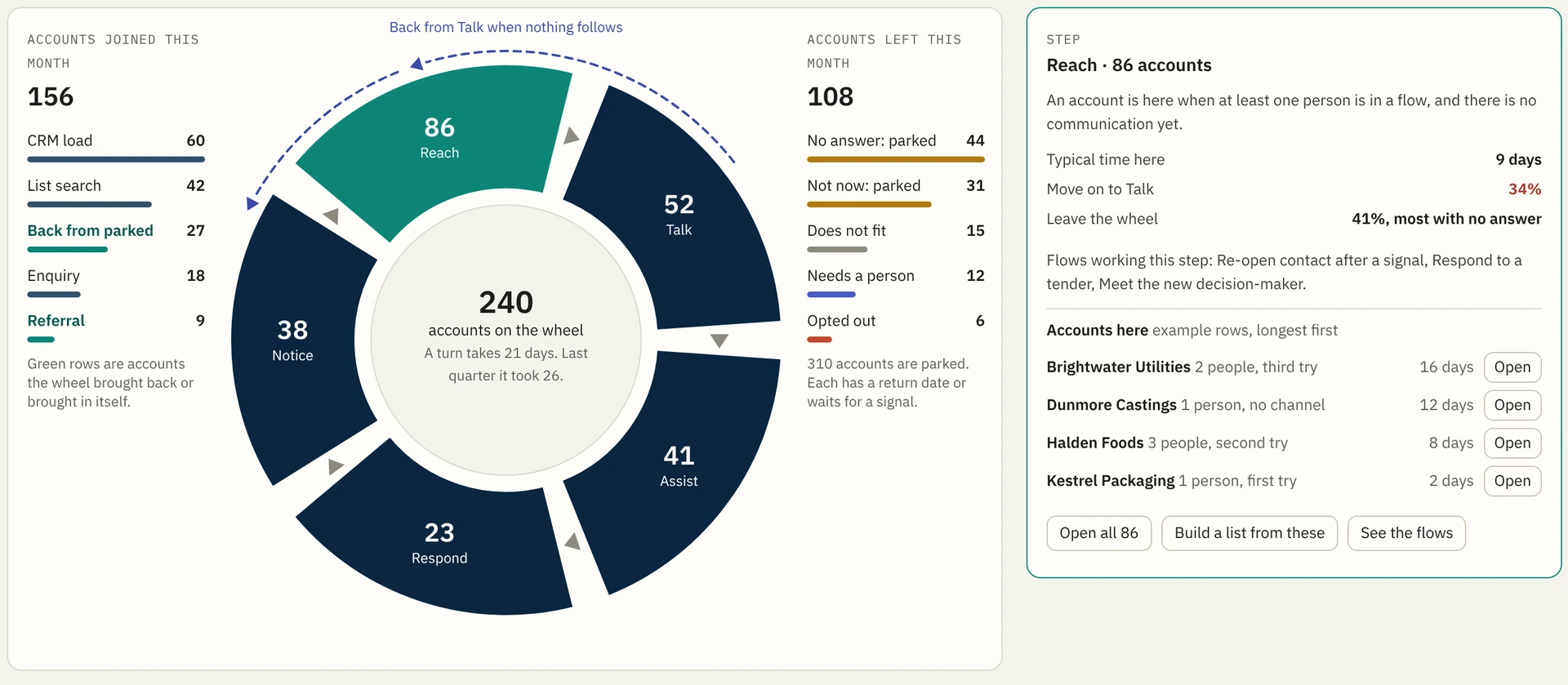
Five steps. One wheel.
Every account, and every person at it, stands on one step of the wheel: Notice, Reach, Talk, Assist or Respond. Your team sees what is moving, and what has gone quiet.
The wheel and the funnel.
The wheel is what your team does with an account, again and again.
A signal starts a flow.
Operations draws a flow: states joined by arrows, from one start to one or more ends. A signal, together with what Corvair knows about the account, starts the flow for a person.
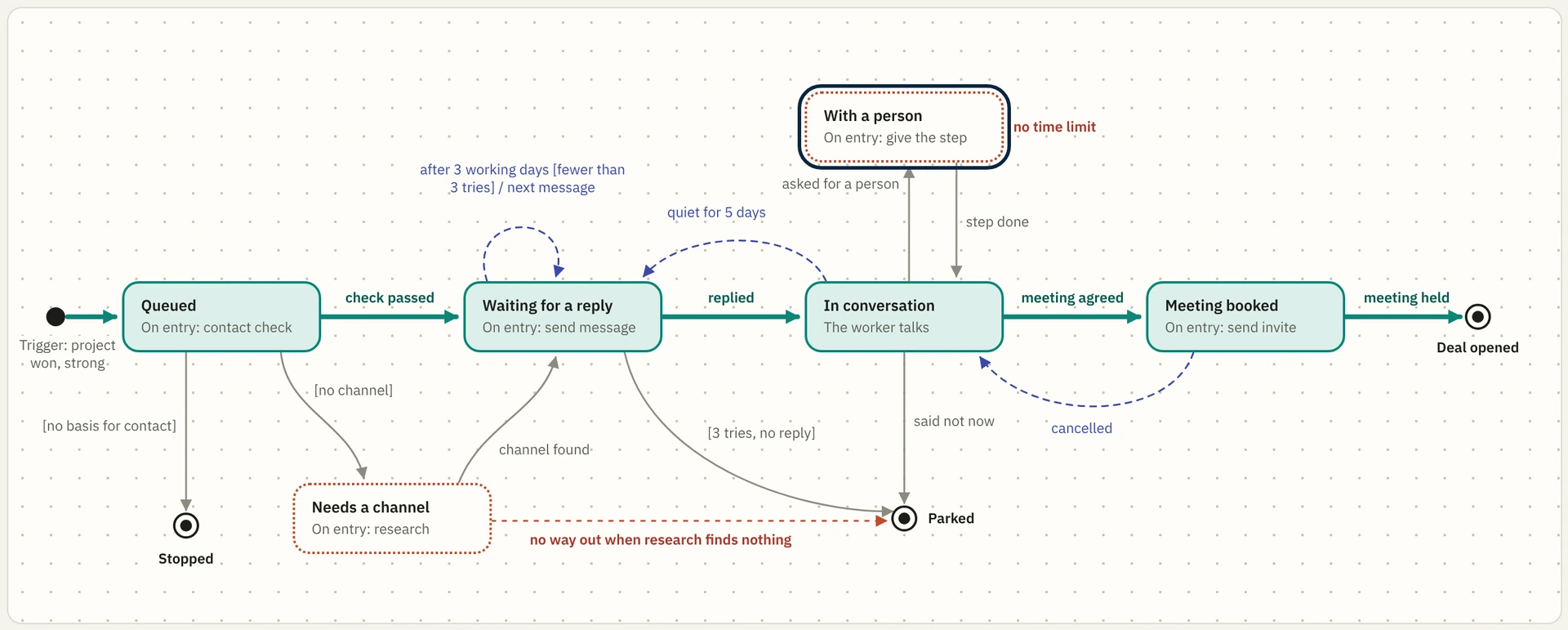
One flow at a time.
A person is in one flow at a time, and every move from state to state is recorded.
Arrows that wait.
An arrow waits for the person, for a set time, or for another system, and can carry a condition.
Checked before it runs.
A version of a flow is published only when it passes its checks.
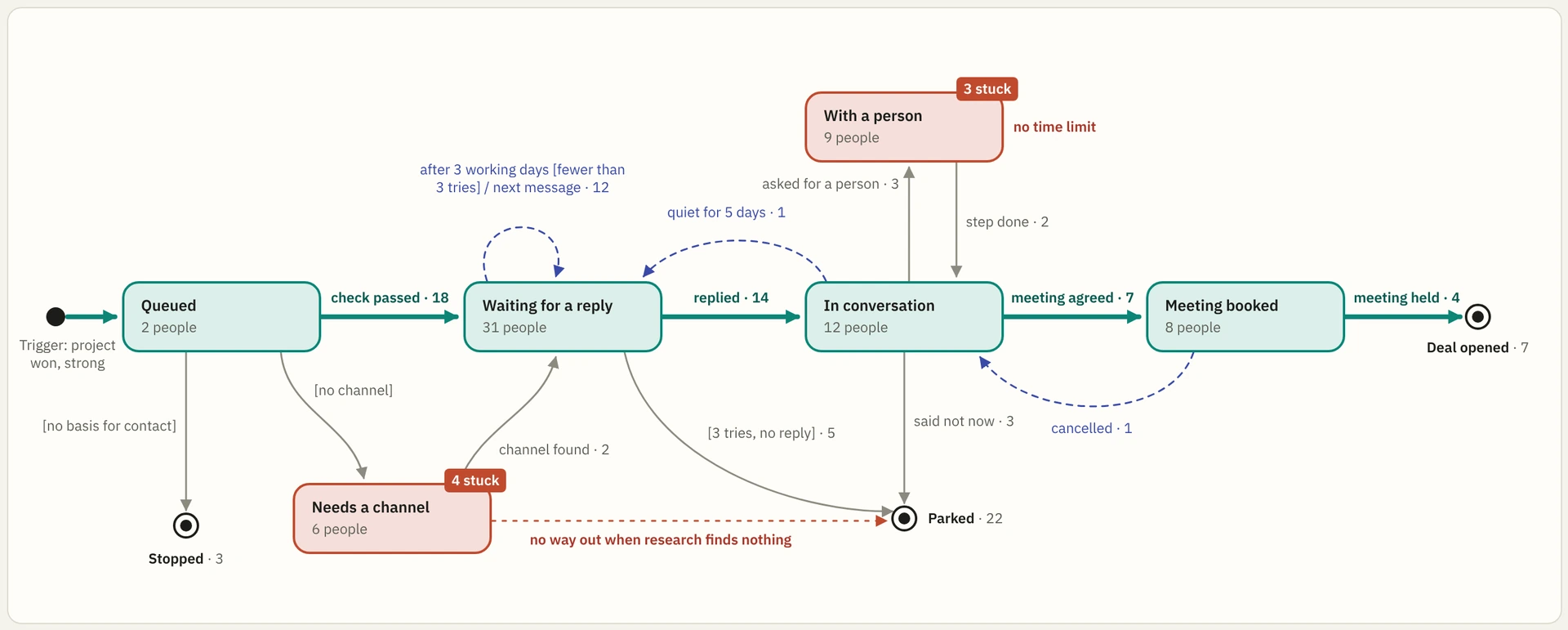
Where flows stand. What is stuck.
One chart for each flow shows how many people are in each state, the path most of them take, and the arrows that go back.
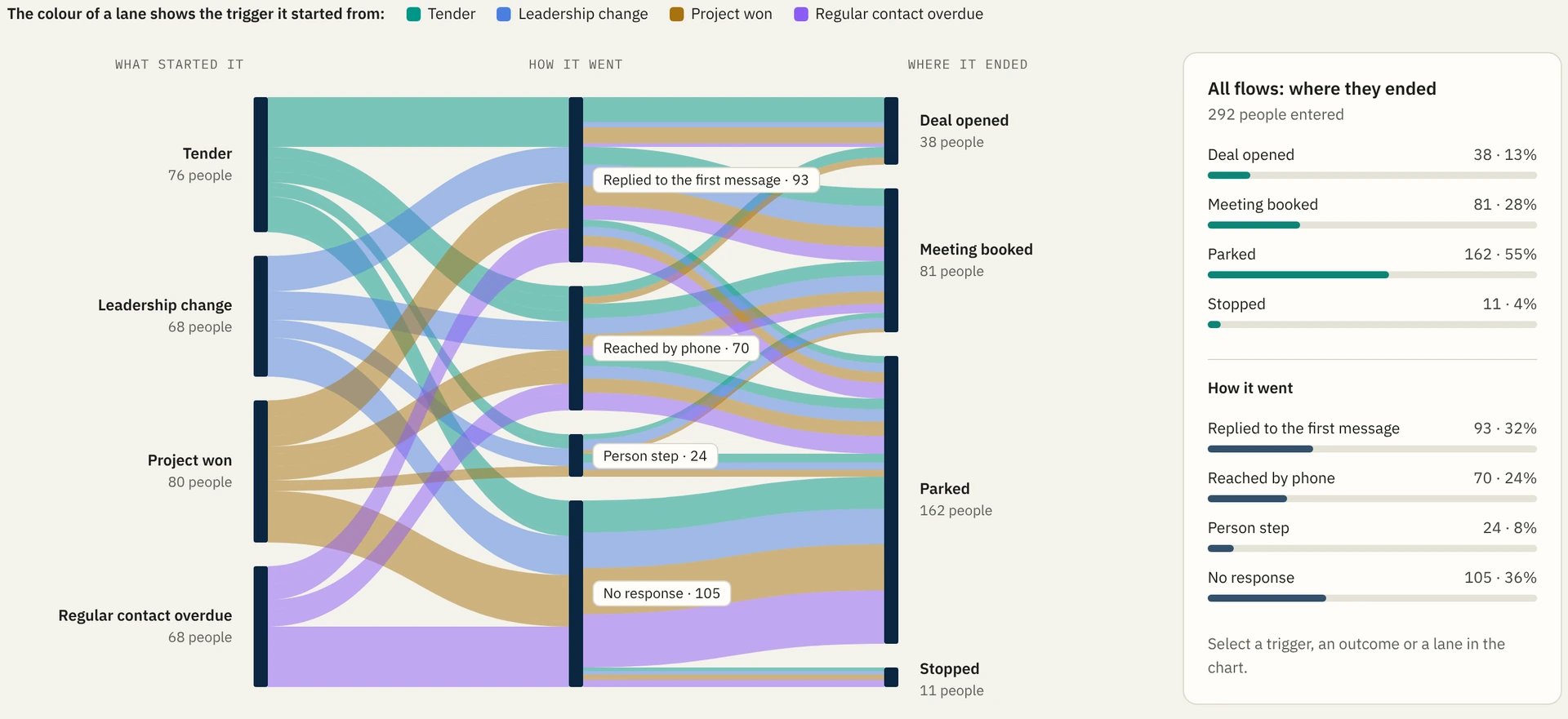
From trigger to outcome. And back.
See which triggers led to which outcomes. Then turn it round: choose an outcome, such as a booked meeting, and see which triggers to produce more of.
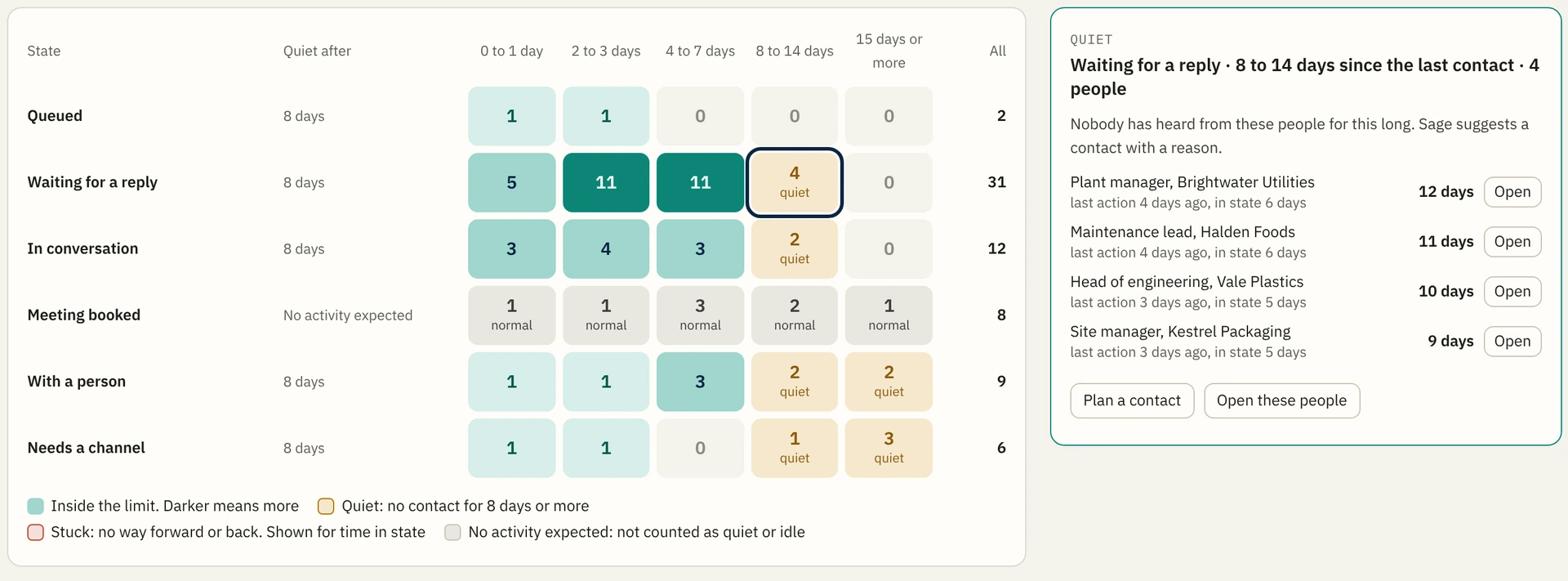
What has gone quiet.
Ageing shows people in a flow, accounts on the wheel, deals in a stage and parked accounts, by how long since the last contact, since the last action, or in the same state.
Who decides. Who is missing.
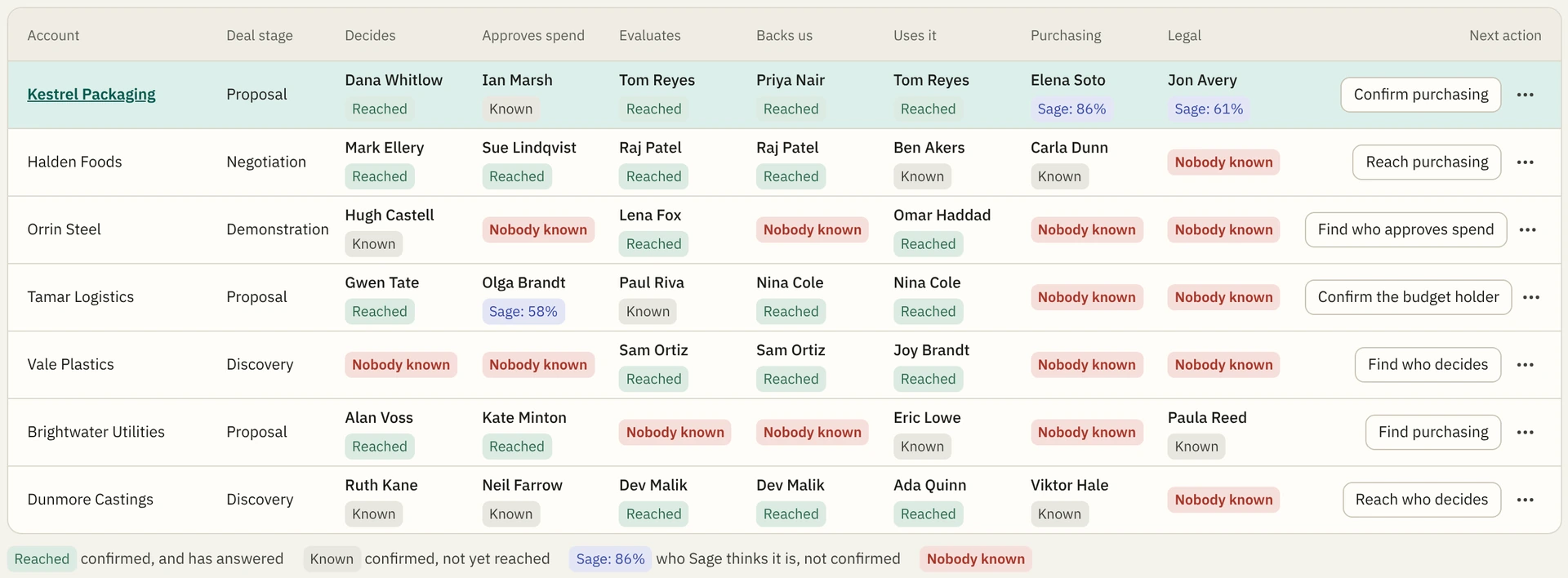
Seven parts in a buying decision: decides, approves spend, evaluates, backs us, uses it, purchasing and legal. One page shows every account against the seven: who holds each part, who the coordinator thinks holds it, and where nobody is known.
A plan for each account.
Each account has a recommended plan.
For each desk.
A rep sees their own questions, steps and stuck people.